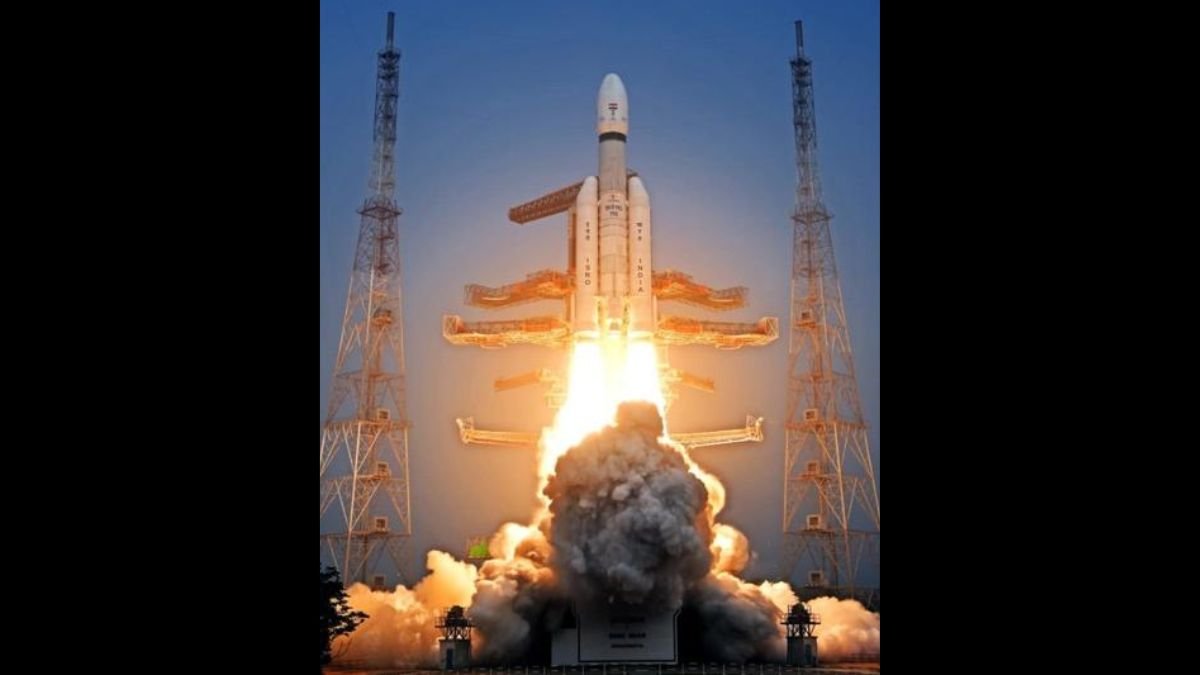
The Indian Space Research Organisation (ISRO) has achieved another significant milestone in its expanding spaceflight portfolio with the successful launch of the LVM3-M6 rocket carrying the BlueBird Block-2 mission. The launch, conducted from the Satish Dhawan Space Centre, underscored India’s growing reputation as a reliable partner for advanced commercial and international space missions while reinforcing the capabilities of its heavy-lift launch vehicle.
The LVM3, formerly known as Gaganyaan Mark-III, lifted off precisely on schedule, its powerful twin solid rocket boosters igniting against the early morning sky. Within minutes, the vehicle cleared the launch tower and began a smooth ascent, drawing applause from scientists, engineers, and mission controllers monitoring the flight. ISRO later confirmed that all mission parameters were met and that the BlueBird Block-2 payload was successfully placed into its intended orbit.
The BlueBird Block-2 mission represents the next phase in a satellite program designed to enhance space-based communication capabilities. These satellites are engineered with advanced antenna systems and high-throughput payloads, allowing them to deliver robust connectivity across wide geographic regions. Their deployment is expected to play a key role in strengthening global communication infrastructure, particularly in underserved and remote areas.
For ISRO, the mission carried added significance. The LVM3 is India’s most powerful operational launch vehicle, capable of placing heavy payloads into low Earth orbit and beyond. While the rocket was initially developed to support India’s human spaceflight ambitions, it has increasingly been used for complex commercial and international missions. The success of LVM3-M6 further validates the vehicle’s reliability and adaptability.
According to ISRO officials, the mission unfolded exactly as planned. After liftoff, the rocket’s solid boosters provided the initial thrust before separating cleanly. The core liquid stage then took over, followed by the cryogenic upper stage, which executed a precise burn to inject the BlueBird Block-2 payload into orbit. Telemetry data throughout the flight indicated nominal performance across all systems.
The collaboration behind the BlueBird Block-2 mission highlights the evolving nature of the global space sector. Modern satellite missions often involve partnerships that span multiple countries, combining launch services, satellite manufacturing, and downstream applications. ISRO’s role as the launch service provider reflects the trust placed in India’s space infrastructure and operational expertise.
In recent years, ISRO has steadily expanded its commercial launch portfolio, offering cost-effective and dependable access to space. Missions such as BlueBird Block-2 demonstrate how the agency is moving beyond small satellite launches to handle more complex and demanding payloads. This shift aligns with India’s broader strategy of positioning itself as a major hub in the global space economy.
The successful deployment of the BlueBird Block-2 satellites is expected to have tangible benefits once the constellation becomes fully operational. Enhanced connectivity can support a wide range of applications, including emergency response, maritime and aviation communications, and improved internet access in regions where terrestrial networks are limited or unavailable. Such capabilities are increasingly critical in a world that depends heavily on seamless digital communication.
From a technological standpoint, the mission also provided ISRO with valuable data and experience. Each LVM3 flight contributes to incremental improvements in vehicle design, mission planning, and operational efficiency. These lessons are particularly important as the agency prepares for future crewed missions and more ambitious interplanetary projects.
The launch was met with widespread praise from the scientific community and government leaders, who lauded the dedication of the thousands of engineers and technicians involved. Developing and executing a heavy-lift mission requires years of preparation, rigorous testing, and precise coordination, all of which were evident in the flawless execution of LVM3-M6.
Looking ahead, ISRO has an ambitious launch manifest that includes scientific missions, Earth observation satellites, and additional commercial payloads. The success of the BlueBird Block-2 mission adds momentum to these plans, reinforcing confidence in India’s ability to meet demanding mission requirements.
In conclusion, the successful launch of the LVM3-M6 rocket carrying the BlueBird Block-2 mission stands as a testament to ISRO’s growing maturity as a spacefaring organization. It reflects not only technological excellence but also the spirit of international collaboration that defines modern space exploration. As the satellites begin their operational life in orbit, the mission’s impact is expected to extend far beyond the launch pad, contributing to global connectivity and reaffirming India’s place on the world stage of space technology.