
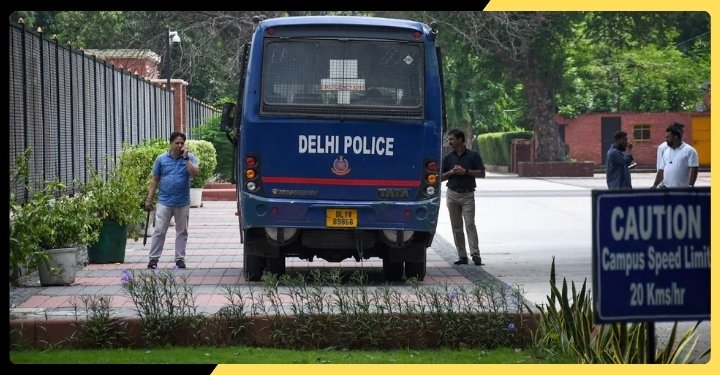
New Delhi was placed on high alert after at least nine schools across the national capital received bomb threat emails containing the message “Delhi will become Khalistan,” triggering panic among parents, students, and school authorities. The threats, which were sent early in the day, prompted swift action from law enforcement agencies, bomb disposal squads, and emergency services, leading to evacuations and intensive security checks at multiple educational institutions.
According to Delhi Police officials, the threatening emails were received almost simultaneously by several schools located in different parts of the city, suggesting a coordinated attempt to spread fear. As soon as school administrations reported the messages, local police stations were alerted and standard operating procedures were activated. Students and staff were immediately evacuated from the premises as a precautionary measure, while bomb detection and disposal teams conducted thorough searches.
Authorities confirmed that no explosives or suspicious materials were found at any of the locations after extensive checks. However, the seriousness of the language used in the emails, particularly the reference to “Khalistan,” has raised concerns about the intent behind the threats and the possibility of an attempt to disturb public order or communal harmony.
Senior police officials stated that cyber experts are actively tracing the origin of the emails. Preliminary investigations suggest that the messages may have been sent using masked or foreign servers, a tactic commonly used in hoax threats to delay identification. “We are examining IP addresses, email headers, and other digital footprints. Multiple agencies are involved in the investigation,” a senior officer said, adding that strict action would be taken against those responsible.
The term “Khalistan” refers to a proposed independent Sikh homeland, a subject that has long been sensitive in India due to its historical, political, and security implications. While the movement has little support within India today, references to it have occasionally surfaced in provocative messages, often aimed at creating fear or gaining attention. Officials emphasized that there is no immediate intelligence input suggesting a real terrorist plot linked to the threats, but they are not taking any chances.
Parents rushed to schools upon hearing the news, many expressing anxiety and anger over repeated bomb threats targeting educational institutions in recent months. “This is extremely distressing. Children should feel safe at school, not scared,” said a parent whose child studies at one of the affected schools. Several parents called for stricter punishment for those making hoax threats, arguing that such acts disrupt lives and strain security resources.
School authorities also expressed concern over the psychological impact on students. Many institutions decided to suspend classes for the day or switch to online mode to ensure safety and allow children time to recover from the shock. Counseling support was offered in some schools, especially for younger students who appeared visibly shaken during evacuations.
Delhi’s education department issued a statement urging schools to remain vigilant while reassuring parents that all necessary safety protocols are in place. The department emphasized the importance of not spreading unverified information or rumors on social media, as misinformation could amplify panic. “Law enforcement agencies are fully equipped to handle such situations. Cooperation from schools and parents is essential,” the statement said.
This incident adds to a growing list of bomb threat hoaxes reported in major Indian cities over the past year, targeting airports, hospitals, courts, and schools. Security experts note that educational institutions are often chosen because threats involving children attract immediate attention and widespread media coverage. While many of these threats turn out to be hoaxes, each one requires full-scale emergency responses, diverting manpower and resources from other critical duties.
Legal experts point out that making bomb threats is a serious criminal offense under Indian law, even if no actual explosive is involved. Individuals found guilty can face severe penalties, including imprisonment. “There is a misconception that hoax emails are harmless pranks. In reality, they are treated as acts endangering public safety,” said a legal analyst.
Delhi Police have urged citizens to remain calm and trust official updates. Increased patrolling has been deployed around schools and other sensitive locations as a precautionary measure. Officials also indicated that they are coordinating with central agencies to determine whether similar threat patterns have emerged elsewhere in the country.
As investigations continue, authorities are focusing on identifying the sender and understanding the motive behind invoking such a charged political message. Whether the threat was an attempt at mischief, provocation, or deliberate psychological intimidation remains unclear. What is certain, however, is that the incident has once again highlighted the vulnerability of public spaces to digital threats and the urgent need for robust cyber monitoring and swift legal action.
For now, schools across Delhi are tightening security and reviewing emergency preparedness protocols, hoping that those responsible are identified soon and that such incidents do not become a recurring nightmare for students, parents, and educators alike.