The Union government is reportedly considering a significant change to one of India’s most prominent rural welfare programmes—the Mahatma Gandhi National Rural Employment Guarantee Scheme (MGNREGS). According to senior officials familiar with the matter, the scheme may soon be renamed “Pujya Bapu Gramin Rozgar Yojana,” marking a symbolic shift intended to foreground Mahatma Gandhi’s influence on rural development and labour rights.
While no official announcement has been made yet, discussions within policy circles and the Ministry of Rural Development suggest that the move is under active evaluation. The potential rebranding has sparked a wide-ranging national conversation on the motivations, implications, and politics surrounding the change.
A Scheme with a Transformative Legacy
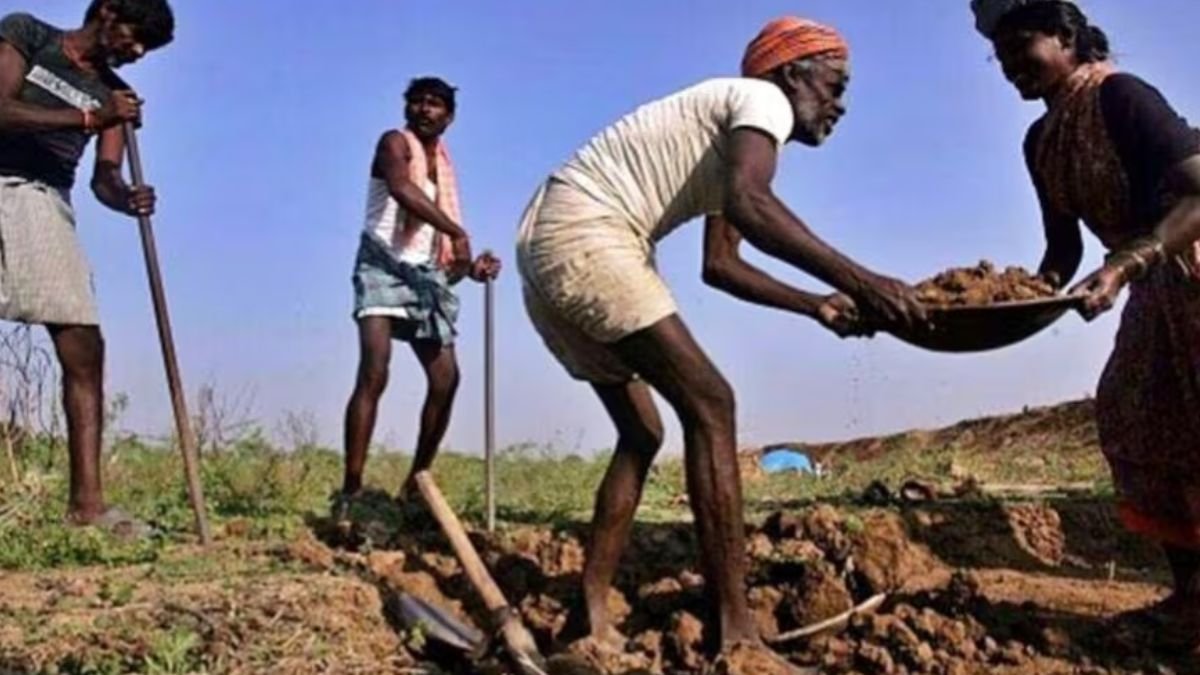
Introduced in 2005, MGNREGS has long been regarded as a landmark rights-based welfare programme. It guarantees 100 days of wage employment to every rural household that demands work, making it the world’s largest employment assurance scheme. Over nearly two decades, it has played a critical role in stabilising rural incomes, supporting village infrastructure creation, and providing a safety net during economic shocks such as droughts, demonetisation, and the COVID-19 pandemic.
Renaming a programme of such scale naturally carries both symbolic and practical meaning. If adopted, the new title—Pujya Bapu Gramin Rozgar Yojana—would explicitly invoke Mahatma Gandhi’s vision of self-reliant villages rooted in dignity of labour and community-driven development. Supporters of the proposal argue that the emphasis on “Bapu” reinforces the Gandhian philosophy of rural upliftment and could reinforce the ideological foundations originally intended for the scheme.
Political and Ideological Context
Observers note that the proposal comes at a time when the government has undertaken several exercises in rebranding or reframing national schemes to highlight historic figures, civilisational narratives, and cultural icons. Renaming MGNREGS, however, carries unique political sensitivities because of the programme’s association with the previous United Progressive Alliance (UPA) government, under which it was launched.
Some analysts interpret the potential shift as an attempt to ideologically reclaim a popular welfare initiative by linking it more closely with Gandhian thought, which has universal appeal across political lines. They point out that references to Gandhi’s advocacy of rural empowerment were present even in MGNREGS’s original conceptualisation, though not explicitly reflected in its name when it was last revised in 2009 from “NREGS” to “MGNREGS.”
Critics, however, argue that the proposed rebranding may serve as a political tool aimed at distancing the scheme from past administrations rather than substantively improving its functioning. They contend that the government should prioritise issues such as timely wage payments, improved transparency, and better implementation rather than focusing on cosmetic changes.
Views from the Ground
In rural India, the response to the news has been mixed. For many workers and local administrators, the name of the scheme is far less important than the reliability of work availability and wage disbursal. “We will call it whatever the government wants,” said a panchayat official from Rajasthan. “What matters to us is that wages arrive on time and that there are enough sanctioned projects.”
Daily-wage workers echo similar concerns. For them, the scheme serves as a lifeline during lean agricultural months. While some welcomed the tribute to Gandhi, others feared that a name change might signal deeper structural revisions or reduced budget allocations—concerns fuelled by ongoing debates about MGNREGS funding adequacy.
Administrative and Logistical Considerations
Renaming a flagship programme of this magnitude involves more than altering signboards. It would require updates across thousands of documents, digital portals, MIS systems, job cards, muster rolls, and training materials used by millions of workers and functionaries. Experts caution that abrupt changes can occasionally create confusion in the field, particularly in regions where literacy levels are low or administrative capacity is stretched.
However, officials emphasise that any transition would be managed in a phased manner to avoid disruption. Similar transitions—such as renaming the Ministry of Human Resource Development as the Ministry of Education—have demonstrated that administrative systems can adapt effectively with adequate planning.
Symbolism vs. Substantive Change
One of the central debates emerging from this development revolves around whether renaming the programme would bring substantive improvements to implementation quality. Policy specialists highlight persistent challenges: delays in wage payments, uneven state capacity, limited awareness among workers about their rights, and political interference in the selection of works.
Some argue that a Gandhian framing might reinvigorate the programme’s ethos of community participation and decentralised planning. Gandhi envisioned village communities deciding their own priorities and undertaking productive work that strengthened local economies—a vision that, in theory, aligns with MGNREGS’s original intent.
Yet others caution that symbolic messaging alone cannot resolve operational bottlenecks. They call for deeper reforms, such as upgrading digital systems, enforcing accountability measures, and enhancing the capacity of gram panchayats.
Why the Government Might Proceed
If the renaming goes forward, it may likely be part of a broader narrative strategy connecting rural livelihoods with cultural and moral values. By foregrounding Gandhi’s legacy, the government could position the programme within a broader national vision of sustainable rural development rooted in self-reliance, dignity, and community well-being.
Moreover, such a move may aim to boost the scheme’s visibility and public perception, especially at a time when rural distress and economic pressures remain prominent concerns.
Conclusion
The proposal to rename MGNREGS as Pujya Bapu Gramin Rozgar Yojana has stirred a nationwide conversation about symbolism, governance, and the future trajectory of rural employment policy in India. Whether perceived as a tribute, a political recalibration, or an administrative distraction, the potential rebranding underscores the enduring significance of the scheme itself.